In 2014, the Knesset officially designated Nov. 30 as Yom Haplitim (The Day Marking the Departure and Expulsion of Jews from Arab Countries and Iran) to commemorate the flight of more than 850,000 Jews in the mid-20th century.
This year, hundreds of Israelis with roots in those countries converged on the National Library of Israel (NLI) in Jerusalem on Sunday, Nov. 30, to take part in an event titled “Sephardi Voices: The Other Refugees—The Untold Stories of Sephardi-Mizrachi Jews.”
They came to share their experiences, view artifacts from Jewish life in Arab countries and Iran and celebrate the addition to the NLI of the Sephardi Voices documentation project that will preserve and amplify their stories.
Sephardi Voices is an international heritage project that has been collecting testimonies from the survivors of Arab-Jewish communities for decades. Its digital archives consist of nearly 450 oral history interviews in English, Hebrew, Judaeo-Arabic, French and Italian, as well as portraits, documents and photographs chronicling the life stories of the worldwide Sephardi–Mizrachi community.
For the first time, the collection is now available online via the National Library of Israel website. The Sephardi Voices donation to the NLI includes The Victor and Edna Mashaal Collection, the Eli Timan Collection and the Shasha Collection.
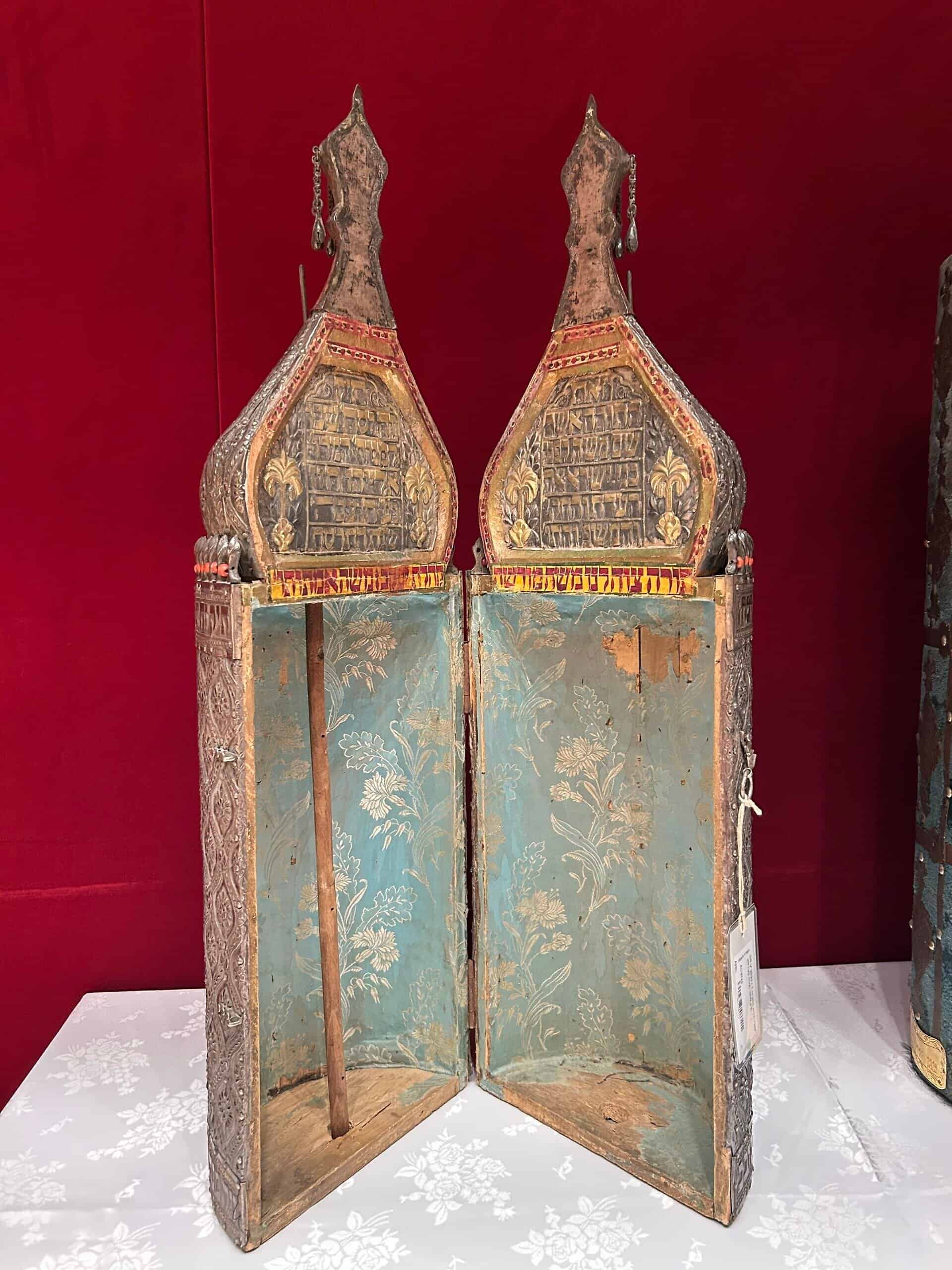 A Torah cover from Baghdad at the National Library of Israel, Nov. 30, 2025. Photo by Judy Lash Balint.
Throughout the day, visitors crowded in to view a special exhibition of unique items of Sephardi–Mizrachi communities from the library’s collections, which included everything from ornate Torah scrolls rescued from abandoned synagogues to the colorful costumes of Egyptian Jewish belly dancers.
In his address to the packed gathering at the library, Dr. Henry Green, founder and executive director of Sephardi Voices and former director of Judaic and Sephardic Studies at the University of Miami, recounted the thousands year history of Jews in Arab lands and noted that the quest for recognition of the displacement of almost a million Jews and the destruction of their communities is now part of an international quest for truth and justice.
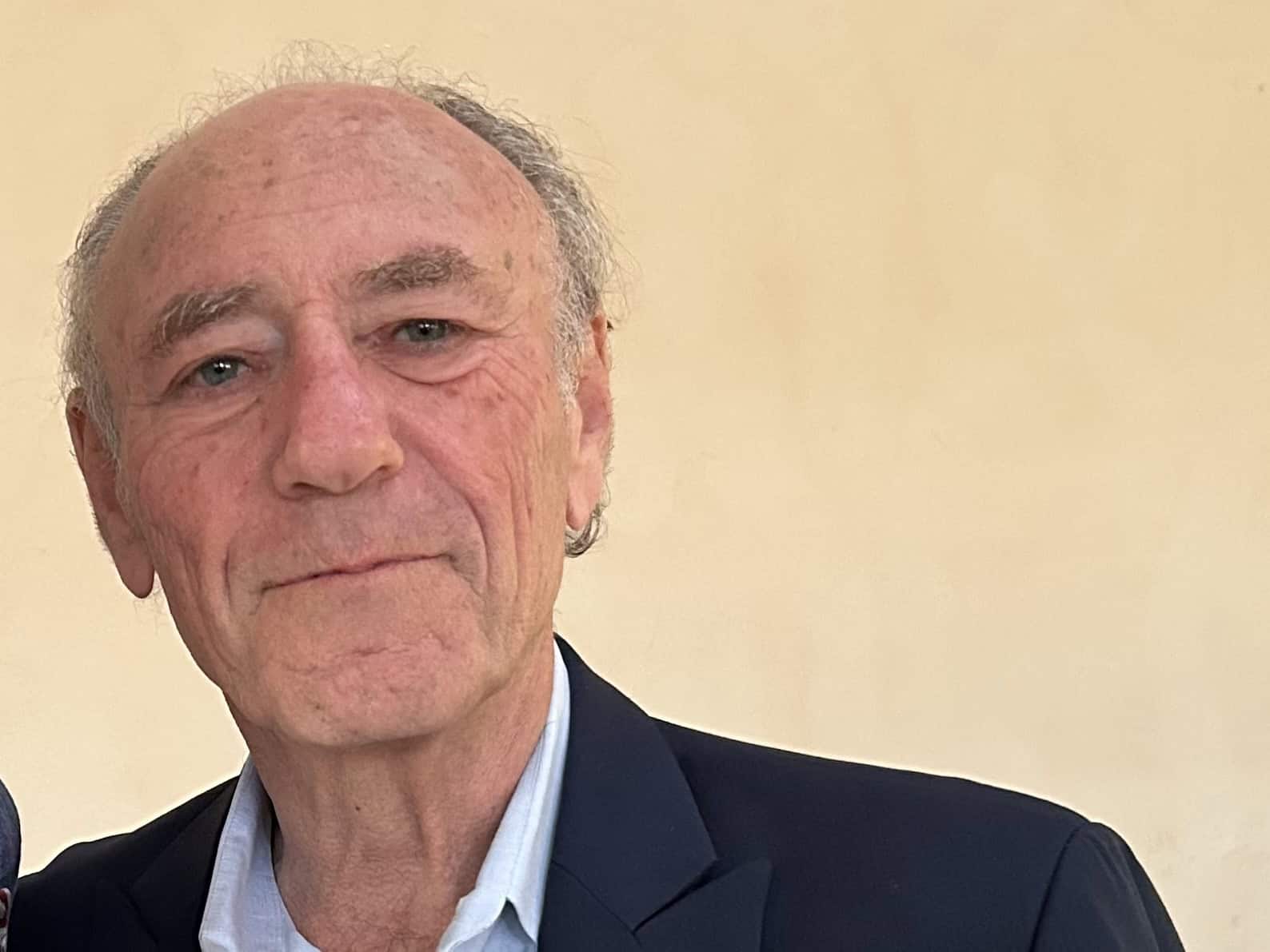
Speaking with JNS, Green expressed his gratitude to the NLI and its management. “They are the first major Israeli organization to say, we understand what you’re doing. We’re with you,” he said. “This event by the National Library is really the first time a major institution has taken the legacy and is using not just the past but the present by bringing all these people together and having the witnesses speak as a way of saying,
hey, what about us?”
Dr. Henry Green at the National Library of Israel,
Nov. 30, 2025. Photo by Judy Lash Balint
Levana Zamir, 87, president of the Center for the Heritage of Egyptian Jewry, was one of the witnesses who shared their stories at the event. Born in Cairo to a wealthy Jewish Egyptian industrialist family, Zamir reminisced about the sophisticated and cosmopolitan atmosphere of Egypt under the rule of King Farouk and British occupation.
Zamir recalled how her idyllic childhood of summer seaside vacations, cafes, villas and friendly relations with Christian and Muslim neighbors ended abruptly on May 14, 1948, the day David Ben-Gurion declared the State of Israel, when Egyptian police officers invaded her home. Her uncle was arrested that day and spent 18 months in jail, accused of being a Zionist.
“I was 10 years old, and I was convinced they would come for me next,” she said.
Her uncle, Habib Vidal, was released only after agreeing to permanently leave the country. His brother, Levana’s father, was told he should go to see his brother at the ship he was boarding in Alexandria. “The message was clear,” Levana said. They left everything and set sail for Marseilles, where they spent six months in a transit camp before arriving in Israel.
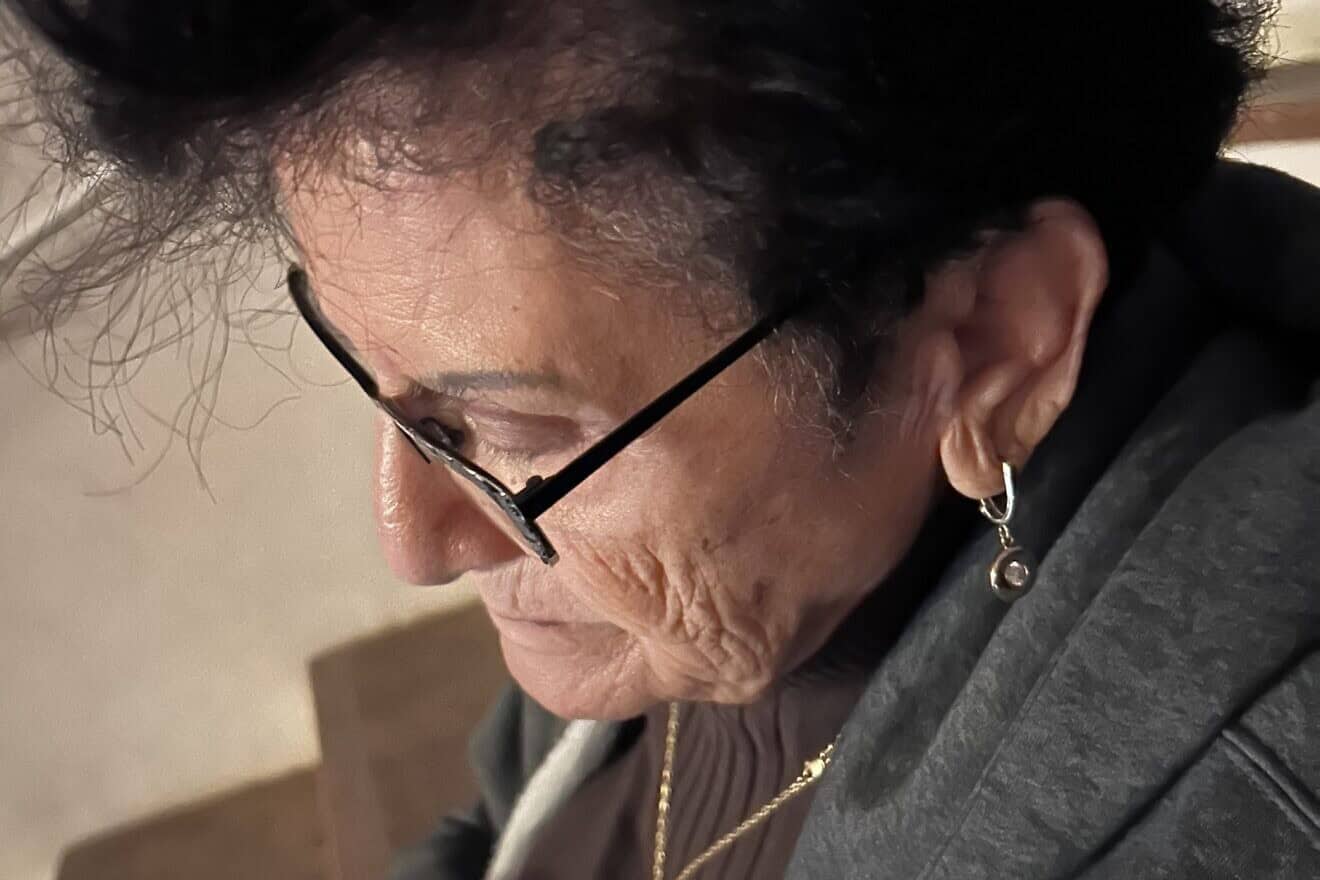
Miriam Vidal at the National Library of Israel, Nov. 30, 2025. Photo by Judy Lash Balint
Zamir’s sister-in-law, Miriam Vidal, told JNS of her own story of fleeing from her birthplace of Herat, Afghanistan, as a four-year-old in 1951,
.together with her extended family of siblings and grandparents
“It took us three months to walk from Herat. We made our way to Tehran, where my mother gave birth, before we managed to arrive in Israel,” she recalled.
Vidal’s grandfather was a rabbi of the large Herat Jewish community, which Vidal says traces its roots to the Ten Lost Tribes of Israel exiled by the Assyrians and Babylonians.
Like hundreds of thousands of Jewish refugees from Arab lands who arrived in the early 1950s and late 1960s, Vidal and her family spent four years in a transit camp in difficult conditions.
Two other witnesses who spoke at the event fled from their communities decades later. Edwin Shuker, a former president of Justice for Jews from Arab Countries (JJAC), left Baghdad in 1971, when he was 16. “I had eight years of paradise and eight years of hell,” he said. The dramatic turn in his life was precipitated by the rise to power of the Ba’ath party in 1963.
“We were in an open prison after that and would have given up everything to leave,” he related. In 1969, following the public hanging of nine Jews accused of being Zionist spies, Shuker’s father managed to obtain fake passports and the family fled to the UK.
Dr. Edy Cohen was born in Beirut in 1972. Today he is known as Israel’s unofficial Arab language spokesperson, with hundreds of thousands of followers on several social media platforms.
Cohen told the audience that he grew up in a Shi’ite neighborhood, studied in a Christian school and had good relations with both Muslim and Christian neighbors. “We all celebrated Christmas and Ramadan and respected each other,” he said.
Things changed with Operation Peace for Galilee when the IDF invaded Lebanon in 1982. With the rise of Hezbollah in 1985, things deteriorated rapidly for the remaining Jews of Lebanon. On one day, Cohen recounted, 11 Jews, including his father, Haim, were arrested and murdered. The family finally left Beirut for Israel in 1991.
“You can’t forget the land of your birth,” Cohen pointed out, citing the importance of both preserving the heritage of Jews from Arab lands and publicizing the injustice perpetrated against them.
“We were Zionists 2500 years before Herzl,” exclaimed Shuker. “The story of Jews in Arab lands must be integrated into Jewish education,” he stated. “It’s a central part of the story of the Jewish people.”
“Today is a wonderful signature day,” Green concluded. “But the hope is that going forward, there’ll be Yom Haplitim focusing on every community that has disappeared since 1948.”
.
 עברית
עברית
 רחוב פינסקר 56 , תל-אביב - מיקוד 6356811
 hitahdutoleimisrayim@gmail.com